Serving Durham and Surrounding Areas



Who Is Responsible for a Sewer Line Problem in Hillsborough: The Homeowner or the Town?
A sewer problem can quickly disrupt your entire home. Several drains may slow down at once, toilets might begin gurgling, or wastewater could back up through a shower or floor drain. Once you realize the problem may extend beyond a single fixture, an important question comes next: Is the homeowner responsible for fixing it, or should you call the Town of Hillsborough?
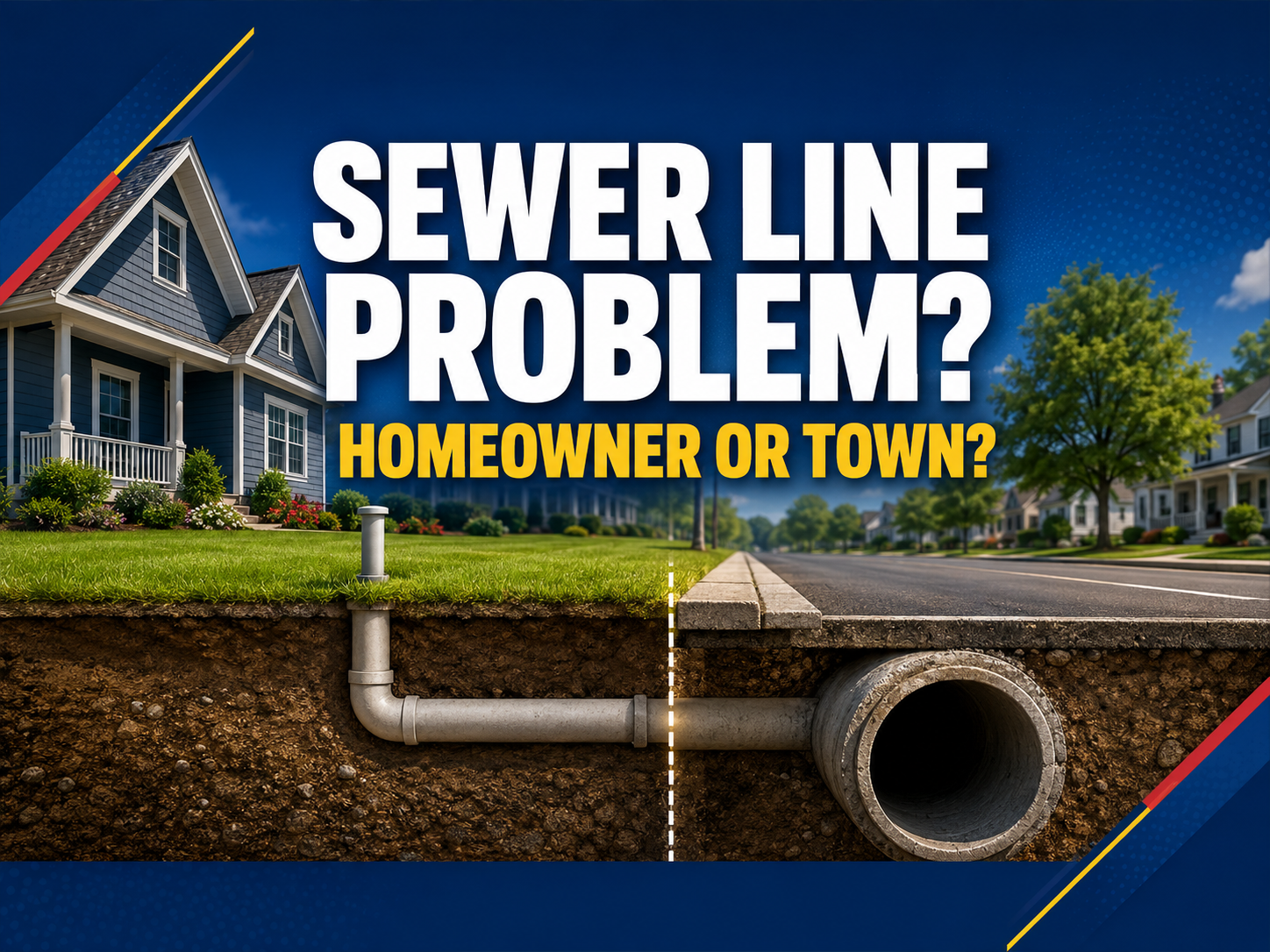
For homes connected to Hillsborough’s municipal sewer system, responsibility generally depends on where the blockage or damage is located. The homeowner typically maintains the sewer line between the house and the public right of way or utility easement. The town maintains the public sewer main and portions of the service line within public rights of way or easements.
Because the dividing line is underground, determining responsibility may require help from the town, followed by a professional plumbing inspection if the public system is not the source.
What Part of the Sewer Line Is the Homeowner’s Responsibility?
Hillsborough property owners are generally responsible for plumbing inside the house and the private sewer service line running from the building to the public right of way or utility easement.
This buried pipe, often called a sewer lateral, carries wastewater away from your home and connects your plumbing to the municipal sewer system. Although it eventually joins a public line, the portion crossing your property is usually yours to maintain.
Homeowners may be responsible for problems involving:
- Clogged drains or pipes inside the house
- Blockages between the home and public right of way
- Tree roots growing into the private sewer line
- Grease, wipes, waste, or debris obstructing the pipe
- Cracked, separated, corroded, or collapsed sewer lines
- Damage caused by construction, landscaping, or soil movement
- A missing or inaccessible sewer cleanout
A problem can still be the homeowner’s responsibility even when it occurs several feet from the house or beneath the front yard. What matters is whether the affected section is on the private side of the system.
What Does the Town of Hillsborough Maintain?
The Town of Hillsborough generally owns and maintains the public sewer mains, which are commonly located beneath or alongside roadways. The town also maintains sewer service connections within public rights of way and utility easements.
The town may be responsible for:
- Blockages in a public sewer main
- Damage affecting town-owned sewer infrastructure
- Problems with a service connection inside a public right of way
- Sewer spills or overflows originating from the municipal system
- Blockages between a town-maintained cleanout and the public main
Responsibility can vary based on the property’s layout, recorded easements, cleanout placement, and the cause of the problem. Property owners may also be responsible for costs if something from their home causes damage or an obstruction within the town’s sewer system.
What Is a Sewer Cleanout, and Why Does It Matter?
A sewer cleanout is a capped pipe that provides direct access to the sewer lateral. Plumbers and utility crews can use it to inspect the line, remove obstructions, or determine which portion of the system is affected.
In Hillsborough, the water meter and sewer cleanout are often placed near the boundary between private property and the public right of way or easement. This makes the cleanout an important reference point when determining responsibility.
A plumber may also examine the cleanout for clues:
- An empty cleanout could indicate that the blockage is closer to the house.
- Standing water may suggest an obstruction farther down the line.
- Wastewater overflowing from the cleanout indicates that sewage cannot continue flowing toward the main.
These signs can help narrow down the problem, but they do not always provide a complete diagnosis. The cleanout’s condition and exact location also matter.
Should You Call the Town or a Plumber First?
The Town of Hillsborough recommends contacting its Utilities Department first when a municipal water or sewer customer experiences a possible sewer problem. This gives the town an opportunity to inspect its portion of the system before the homeowner pays for private plumbing work.
Water and sewer emergencies can be reported to the town at 919-732-3621. If municipal staff determine that the town-owned system is functioning properly, the problem is more likely to be within the homeowner’s private sewer lateral or indoor plumbing.
At that point, a plumber can investigate the property, determine where the issue is located, and recommend the appropriate solution.
This guidance applies to properties connected to Hillsborough’s municipal sewer system. If your home uses a private septic system, the town does not maintain your sewer pipe, septic tank, or drain field.
Warning Signs of a Private Sewer Line Problem
A clogged sink or shower usually affects only one fixture. A problem with the private sewer lateral often produces symptoms throughout the house because multiple drains depend on the same main line.
Call for help if you notice:
- Multiple fixtures draining slowly at the same time
- Toilets bubbling when a sink, washer, or shower drains
- Wastewater backing up through a tub or floor drain
- Sewer odors coming from drains or the yard
- Water or sewage around the exterior cleanout
- Unusually wet, soft, or green areas over the sewer line
- Recurring clogs that return shortly after being cleared
- Neighboring homes draining normally while yours backs up
These symptoms do not reveal whether the line is clogged, cracked, or collapsed. They do indicate that the problem may extend beyond an isolated fixture.
How a Plumber Locates the Source of a Sewer Problem
Once the town has ruled out a public system problem, a plumber can evaluate the private side. The process may involve inspecting indoor fixtures, checking the sewer cleanout, testing drainage, and using a specialized camera to view the buried line.
A sewer camera inspection may reveal:
- Tree root intrusion
- Grease, sludge, or debris buildup
- Cracked or separated pipe joints
- Corroded or deteriorated pipe walls
- Low sections that collect water and waste
- Foreign objects lodged in the line
- Partial or complete pipe collapses
- The exact location of a defect or obstruction
Accurately locating the problem helps avoid unnecessary excavation and makes it easier to choose between clearing, cleaning, repair, and replacement.
Does the Sewer Line Need Cleaning or Repair?
Not every sewer backup means the pipe is damaged. Many problems begin with an obstruction caused by grease, waste, roots, or materials that should not have entered the plumbing system.
Professional main line drain cleaning may restore normal flow when buildup or debris restricts the pipe. The appropriate cleaning method will depend on the type of blockage, its location, and the condition of the line.
However, repeated clogs may indicate a structural problem. Roots can continue entering through separated joints, while cracked, corroded, or sagging pipes may repeatedly trap waste. Clearing the immediate blockage might provide temporary relief without correcting the underlying damage.
When inspection reveals a damaged pipe, professional sewer line services can address the affected section and help prevent future backups.
How to Reduce the Risk of Sewer Blockages
Many sewer problems begin with items that should never enter a drain or toilet. Products labeled “flushable” may not break apart quickly enough to pass safely through private and municipal sewer lines.
Hillsborough homeowners can help protect their plumbing by following a few basic habits:
- Flush only human waste and toilet paper
- Place wipes, tissues, hygiene products, and cotton swabs in the trash
- Allow cooking grease to cool before disposing of it
- Scrape food waste from dishes before washing them
- Avoid pouring paint, chemicals, or medication down a drain
- Use garbage disposals sparingly
- Keep the sewer cleanout visible and accessible
- Address recurring clogs instead of relying on chemical drain cleaners
- Avoid planting new trees directly over the sewer lateral
Older homes and properties with mature trees may benefit from proactive inspections, especially if the sewer line’s age, material, or repair history is unknown.
Get Help With Sewer and Drain Problems in Hillsborough
When sewage is backing up or several fixtures have stopped draining, start by contacting the Town of Hillsborough to determine whether the municipal system is involved. If the town rules out a problem on its side, Ted’s Air, Plumbing, & Electric can inspect the private sewer line and identify what is preventing it from working properly.
Our drain and sewer plumbing services help Hillsborough homeowners address stubborn blockages, damaged pipes, root intrusion, and other underground plumbing problems. We will locate the issue, explain the available options, and recommend a solution based on the condition of your system.
Contact Ted’s today for sewer and drain service in Hillsborough and the surrounding Durham area.
Frequently Asked Questions About Sewer Line Responsibility in Hillsborough
Am I responsible for the sewer line under my yard?
Homeowners in Hillsborough are generally responsible for the sewer service line between the house and the public right of way or utility easement. The town typically maintains the sewer main and service-line portions located within public rights of way or easements.
How do I know where the public right of way begins?
The sewer cleanout and water meter often help indicate the boundary, but placement varies by property. The Town of Hillsborough can provide information about its infrastructure, and property records or recorded easements may offer additional clarification.
Who should I call first if sewage backs up into my home?
If your property receives municipal sewer service, contact the Town of Hillsborough first so its Utilities Department can check the public system. If the town determines that its lines are operating normally, contact a plumber to inspect your private plumbing and sewer lateral.
Is the town responsible for sewer pipes beneath my house?
No. Plumbing and sewer pipes inside or beneath a private home are generally the property owner’s responsibility. A professional plumber should inspect blockages, leaks, or damaged pipes in these areas.
Can the town charge me for a blockage in the public sewer?
A property owner may be responsible for investigation or repair costs if materials originating from the property cause a blockage or damage within the municipal system. Avoid flushing wipes and putting grease, hygiene products, or other unsuitable materials into drains.
Does homeowners insurance cover private sewer line repairs?
Coverage depends on the policy and the cause of the damage. Standard homeowners insurance may exclude deterioration, corrosion, root intrusion, and other gradual problems. Some insurers offer optional service-line coverage, so homeowners should review their policy or speak with their insurance provider.
What if my Hillsborough property uses a septic system?
The division between homeowner and town responsibility does not apply to a private septic system. Property owners are generally responsible for the pipes, septic tank, and drain field serving their home. A plumber or septic professional can help determine which part of the system is causing the problem.