Serving Durham and Surrounding Areas


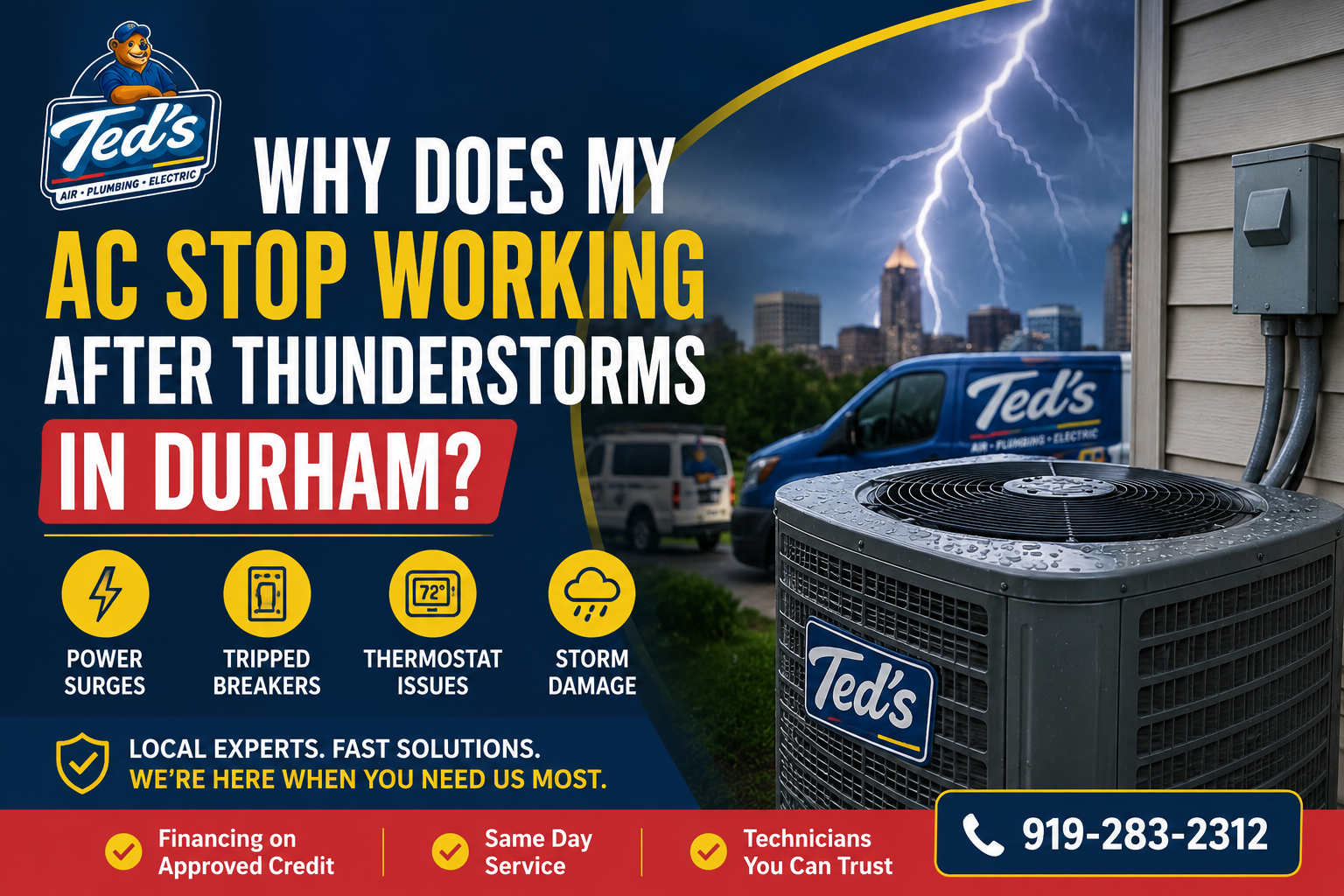
Why Does My AC Stop Working After Thunderstorms in Durham?
Summer thunderstorms are common across Durham and the Triangle. While the rain can provide temporary relief from the heat, severe storms often leave homeowners with another problem: an air conditioner that suddenly won’t turn on, won’t cool properly, or keeps tripping the breaker.
If your AC stopped working after a storm, you’re not alone. At Ted’s HVAC, Plumbing & Electrical, we regularly help Durham homeowners diagnose air conditioning issues that appear immediately after thunderstorms, power outages, and lightning events.
Can Thunderstorms Damage an Air Conditioner?
Yes. Thunderstorms can affect your air conditioning system in several ways, even if lightning never directly strikes your home.
A modern HVAC system relies on electrical components, circuit boards, capacitors, contactors, thermostats, and sensors to operate correctly. Sudden power fluctuations during a storm can damage these components and prevent your system from cooling properly.
1. A Power Surge Damaged an Electrical Component
One of the most common causes of storm-related AC problems is a power surge.
Lightning strikes, utility switching, and power restoration after an outage can send a sudden voltage spike through your home’s electrical system. Sensitive HVAC components are particularly vulnerable to surge damage.
Signs of surge damage may include:
- The thermostat is blank
- The outdoor unit won’t start
- The system turns on but doesn’t cool
- The breaker trips repeatedly
- The AC starts making unusual noises
In many cases, homeowners assume the entire system has failed when only one component needs repair or replacement.
2. The Breaker Tripped During the Storm
Thunderstorms can cause electrical interruptions that trip HVAC breakers.
Before scheduling service, check your electrical panel to see if the AC breaker has moved to the middle or OFF position.
However, if the breaker trips again immediately after resetting it, do not continue resetting it repeatedly. This could indicate a deeper electrical or HVAC issue that requires professional diagnosis.
3. Lightning Damaged the Thermostat
Your thermostat serves as the command center for your cooling system.
Even a nearby lightning strike can damage thermostat wiring or internal electronics. When this happens, the thermostat may:
- Go completely blank
- Display error codes
- Stop communicating with the HVAC system
- Show incorrect temperatures
If your thermostat appears unresponsive after a storm, it may need repair or replacement.
4. The Outdoor Unit Lost Power
Many Durham homeowners discover that their indoor system appears to be running, but the outdoor condenser isn’t operating.
This can happen when:
- A disconnect switch trips
- A fuse blows
- A contactor fails
- Electrical wiring is damaged
Without the outdoor unit running, your system may continue circulating air while failing to cool your home.
5. Water Affected an Existing HVAC Problem
Air conditioners are designed to operate in rainy weather. However, heavy rain can sometimes expose underlying issues.
For example:
- Clogged condensate drains can worsen
- Damaged electrical connections can become more apparent
- Older components may fail after sudden temperature changes
The storm may not have caused the problem directly, but it can reveal weaknesses that were already present.
What Should You Check Before Calling for Service?
If your AC stops working after a Durham thunderstorm, try these steps first:
- Check your thermostat settings.
- Verify the breaker has not tripped.
- Replace thermostat batteries if applicable.
- Confirm the outdoor unit is receiving power.
- Check your air filter if airflow seems weak.
If these steps don’t restore operation, professional diagnosis is usually the safest next step.
Can a Surge Protector Protect My HVAC System?
Many homeowners are surprised to learn that HVAC systems can be protected with whole-home surge protection.
A professionally installed surge protector can help reduce the risk of damage from lightning-related voltage spikes and power fluctuations. This protection can benefit not only your air conditioner but also your electrical panel, appliances, and other major home systems.
When Should You Call an HVAC Professional?
Contact an HVAC technician if:
- Your AC won’t turn on after a storm
- The breaker continues tripping
- The system runs but doesn’t cool
- You smell burning odors
- The thermostat is unresponsive
- The outdoor unit won’t start
Storm-related HVAC problems often involve both cooling and electrical systems, making proper diagnosis especially important.
Need AC Repair After a Storm in Durham?
Thunderstorms are a fact of life in Durham, but losing your air conditioning doesn’t have to be.
If your AC stopped working after a power outage, lightning strike, or severe storm, Ted’s HVAC, Plumbing & Electrical can help identify the cause and get your system running again. Whether the issue involves a damaged capacitor, tripped breaker, surge damage, or another electrical problem, our team can provide the repairs needed to restore comfort to your home.